

Through the first half of 2026 our long positions have contributed positive gains, while the short book has modestly detracted. We expect the second half of 2026 to be more like the first quarter, with volatility heading into the midterm elections.

ONE MARKET, TWO PERSONALITIES.
The first half of 2026 displayed a pronounced duality as second quarter market dynamics were nearly opposite those seen in the first. The first quarter was marked by a broadening of performance led by energy, materials and utilities, while the major growth sectors lost ground. In the second quarter, however, performance was very narrow as investors regained their appetite for AI-related exposure. Momentum and high-beta factors firmly took control. Technology was the top-performing S&P 500 sector by a wide margin, heavily driven by the semiconductor industry. Industrials followed at distant second, and much of those gains were also attributable to the AI capex story. Earnings power from a handful of semiconductor industry names drove the narrative. It appears to be warranted for now, but we question the sustainability of these dynamics.
The dominance of high-beta momentum stocks, particularly in the second quarter, broadly presented a challenging environment for risk-aware active investors. We prefer more value-oriented names with sound fundamentals and a demonstrated commitment to shareholder yield through dividends and stock-buybacks. We also look for special situations that may be under-appreciated by other investors. During the second quarter, our long exposure to miners was a headwind as a pull-back in gold prices weighed on the group. Our short technology positions were also a drag. Through the first half of 2026 our long positions have contributed positive gains, while the short book has modestly detracted. We expect the second half of 2026 to be more like the first quarter, with volatility heading into the midterm elections. Recent history has shown the last two midterm years (2022 and 2018) were volatile and challenged investors. We remain constructive on equities overall, and we foresee a scenario where broader participation resumes among some of the less-loved sectors and companies with sound fundamentals.
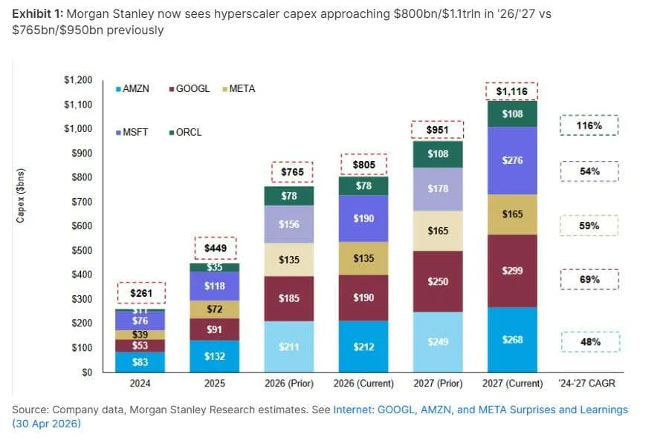
AI capex has been the dominant theme of 20261:
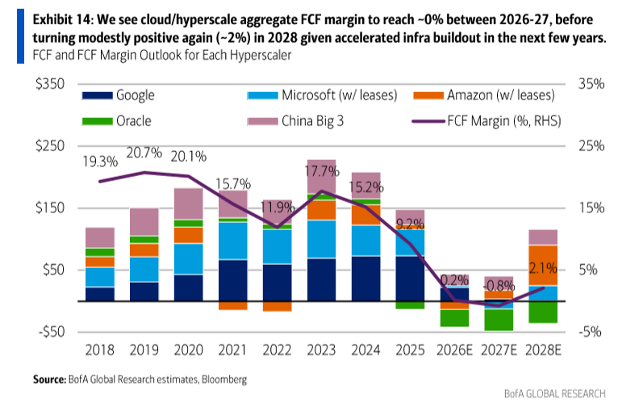
Earnings have been strong, but free cash flow has not:
POSITIONING
Keurig Dr Pepper (KDP). This was the portfolio's top contributor in the second quarter. Shares rose after the company's strong first-quarter results and management reaffirmed full-year guidance.2 KDP completed its acquisition of JDE Peet's in early April and plans to split into two independent companies, one focused on beverages and the other on coffee with management targeting completion in early 2027. We see this as an interesting event-driven setup and expect additional upside. The company maintains a nice dividend yield of just under 3%, which we find attractive.
Honeywell International Inc (HON). We discussed Honeywell in our February Insights after we had recently added to our position. At that time the company was in the process of breaking up into three standalone businesses: aerospace, automation, and advanced materials. The first spinoff of the advanced materials business, now trading under the ticker Solstice (SOLS), was completed in October of 2025. The Honeywell Aerospace spinoff was completed on June 29 and began trading under (HONA). After receiving shares in the corporate action, we took the opportunity to add to our Aerospace position. Following the HONA spinoff, Honeywell Technologies completed a reverse stock split 3, and management raised its full-year profit guidance.
Barrick Mining Corporation (B). We bought shares of the mining giant early in the second quarter after the company advanced with plans to spinoff its North American gold assets through an IPO by the end of this year. The remaining company will be focused on copper production. The strategic rationale is to isolate low‑risk, high‑yield North American gold assets to capture a valuation premium and separate them from Barrick’s international copper expansion. The company is well-into the IPO process, and progress has accelerated since management confirmed the timeline during its update in late April. We believe this presents an attractive opportunity, combined with Barrick’s more than 4% dividend yield as we wait for the spinoff to close.
Global Payments (GPN). We initiated a position in the payments technology firm as it advances through a transformational process to focus the business as a pure‑play merchant‑payments technology leader. By shedding its legacy issuer‑processing arm and absorbing a major global acquiring franchise, GPN has emerged with cleaner lines of business, broader reach, and a more coherent growth narrative. In June, shares rebounded on strong guidance, while improving earnings expectations signaled that the transformation was taking hold.4 We think the company’s streamlined model and the expected synergies from its corporate actions support an upside case. Additionally, Global Payments announced an attractive capital return plan, with over $7B expected to be returned to shareholders in 2026 through share repurchases and dividends.
Home Depot (HD). We recently bought shares of Home Depot, which offers an opportunity to gain quality consumer exposure, with the Trump administration’s intense housing focus as added support. The company has demonstrated its ability to execute despite high mortgage rates, reporting steady demand and improving comps. Management reaffirmed its annual guidance, supported by stable professional‑customer strength and a recovery in weather‑driven categories. We view HD as a defensive, high-quality way to participate in an eventual housing-market normalization, backed by a continued record of capital return to shareholders. The company recently paid its 157th consecutive quarterly cash dividend. 5
On the short side, we broadly tend to look for over-leveraged names that we believe are fads, or story stocks with promotional managements. We maintained our short positions in Rigetti Computing (RGTI) and IONQ as we think their share prices are not substantiated by the minimal amount of revenue these companies generate. We also remain skeptical of private credit, expressed in our KKR & Co. (KKR) and Carlyle Group (CG) positions. We covered our Bitmine (BMNR) and Coinbase (COIN) positions with significant gains but continue to hold Strategy (MSTR) short.
POSITIONING NOTES AS OF 6/30/2026
We see plenty of opportunities both long and short in this environment. Momentum has had a profound long run, creating market distortions, in our opinion. Valuations appear rich in certain areas, and there seems to be a high level of complacency among investors. While we cannot predict when it will occur, we expect mean reversion.

View LBAY top 10 holdings here.
Holdings are subject to change. Characteristics and metrics of the companies shown are for the underlying securities in the fund’s portfolio and do not represent or predict the performance of the fund. There is no guarantee that a company will pay or continually increase its dividend. Section Source: Bloomberg, unless otherwise noted.
**Definitions: A basis point is one hundredth of one percent. One basis point is 0.01%. Earnings per Share Estimate is a company’s expected future annual earnings per share, as estimated by professional analysts. Trailing Price to Earnings (P/E) is the ratio for valuing a company that measures current share price divided by its earnings per share over the last 12 months. Forward Price to Earnings Multiple (P/E) is the ratio for valuing a company that measures current share price divided by its forecasted earnings per share. The cyclically adjusted price to earnings (CAPE) is a ratio that divides a company's or index's current market price by the average inflation-adjusted earnings per share of the last 10 years. Price to Book (P/B) is the ratio for valuing a company that measures current share price divided by book value per share. Book value is a company’s total assets minus liabilities. Price to Sales is the ratio for valuing a company that measures current share price to revenue, indicating how much investors are willing to pay for each dollar of sales. The Q ratio is a financial metric that compares a company's market value to the replacement cost of its assets. The market cap-to-GDP ratio, also known as the "Buffett Indicator," measures a country's total stock market capitalization relative to its Gross Domestic Product (GDP). It's calculated by dividing the total market value of all publicly traded companies by the country's annual GDP. Enterprise Value (EV) is a measure of a company’s total value, and includes market capitalization, cash, and debt. EBITDA is a company’s earnings before interest, taxes, depreciation, and amortization. EV/EBITA may be used as a measure of the value of a company and its operating performance. EV/Sales multiple is the Enterprise Value to trailing 12-month sales ratio. Price to Sales (P/S) ratio is the company's stock price to its revenue, and can offer an indication of how much investors are willing to pay for each dollar of sales.
1 Source: https://thedarksideoftheboom.substack.com/p/morgan-stanley-11-trillion-ai-capex
2 Source: https://www.keurigdrpepper.com/keurig-dr-pepper-reports-q1-results-and-reaffirms-guidance-for-2026/
3 Source: https://www.reuters.com/business/aerospace-defense/honeywell-technologies-raises-profit-guidance-after-one-for-two-reverse-stock-2026-07-08/
4 Source: https://investors.globalpayments.com/news-events/press-releases/detail/506/global-payments-reports-first-quarter-2026-results
5 Source: https://ir.homedepot.com/news-releases/2026/05-21-2026-211314566
Opinions expressed are subject to change at any time, are not guaranteed, and should not be considered investment advice.
Investing involves risk, including loss of principal.
Before investing you should carefully consider the fund’s investment objectives, risks, charges and expenses. This and other information is in the prospectus, a copy of which may be obtained from 833-417-0090. Please read the prospectus carefully before you invest.
“Long” and “short” are investment terms used to describe ownership of securities. To buy
securities is to “go long.” The opposite of going long is “selling short.” Short selling is an advanced trading strategy that involves selling a borrowed security. Short sellers make a profit if the price of the security goes down and they are able to buy the security at a lower
amount than the price at which they sold the security short. Since the Funds are actively managed, they do not seek to replicate the performance of a specified index. The Funds therefore may have higher portfolio turnover and trading costs than index-based funds.
As with all ETFs, Fund shares may be bought and sold in the secondary market at market prices. The market price normally should approximate the Fund's net asset value per share (NAV), but the market price sometimes may be higher or lower than the NAV. The Fund is new with a limited operating history. There are a limited number of financial institutions authorized to buy and sell shares directly with the Fund; and there may be a limited number of other liquidity providers in the marketplace. There is no assurance that Fund shares will trade at any volume, or at all, on any stock exchange. Low trading activity may result in shares trading at a material discount to NAV.
The securities of large-capitalization companies may be relatively mature compared to smaller companies and therefore subject to slower growth during times of economic expansion. Investments made in small and mid-capitalization companies may be more volatile and less liquid due to limited resources or product lines and more sensitive to economic factors. The Fund uses short sales and derivatives (options), both of which may involve substantial risk. The loss on a short sale is in principle unlimited since there is no upward limit on the price of a shorted asset. The potential loss from a derivative may be greater than the amount invested due to counter-party default; illiquidity; or other factors. Through its investments in real estate investment trusts (REITs), the Fund is subject to the risks of investing in the real estate market, including decreases in property revenues, increases in interest rates, increases in property taxes and operating expenses, legal and regulatory changes, a lack of credit or capital, defaults by borrowers or tenants, environmental problems and natural disasters. The fund is classified as “non-diversified” and may invest a relatively high percentage of its assets in a limited number of issuers. Asa result, the fund may be more susceptible to a single adverse economic or regulatory occurrence affecting one or more of these issuers, experience increased volatility and be highly concentrated in certain issuers.
The Fund's exposure to master limited partnerships (MLPs) may subject the Fund to greater volatility than investments in traditional securities. The value of MLPs and MLP based exchange traded funds and notes may be affected by changes in overall market movements, commodity index volatility, changes in interest rates, or sectors affecting a particular industry or commodity, such as drought, floods, weather, livestock disease, embargoes, tariffs, and international economic, political and regulatory developments. Business development companies (BDCs) generally invest in debt securities that are not rated by a credit rating agency and are considered below investment grade quality (“junk bonds”). Little public information generally exists for the type of companies in which a BDC may invest and, therefore, there is a risk that the Fund may not be able to make a fully informed evaluation of the BDC and its portfolio of investments.
Foreside Fund Services, LLC, Distributor
Before investing you should carefully consider the Fund's investment objectives, risks, charges and expenses. This and other information is in the prospectus. A prospectus may be obtained by clicking here. Please read the prospectus carefully before you invest.
“Long” and “short” are investment terms used to describe ownership of securities. To buy securities is to “go long.” The opposite of going long is “selling short.” Short selling is an advanced trading strategy that involves selling a borrowed security. Short sellers make a profit if the price of the security goes down and they are able to buy the security at a lower amount than the price at which they sold the security short.
Since the Funds are actively managed they do not seek to replicate the performance of a specified index. The Funds therefore may have higher portfolio turnover and trading costs than index-based funds.
LBAY Risks: Investing involves risk, including the loss of principal. As with all ETFs, Fund shares may be bought and sold in the secondary market at market prices. The market price normally should approximate the Fund’s net asset value per share (NAV), but the market price sometimes may be higher or lower than the NAV. The Fund is new with a limited operating history. There are a limited number of financial institutions authorized to buy and sell shares directly with the Fund; and there may be a limited number of other liquidity providers in the marketplace. There is no assurance that Fund shares will trade at any volume, or at all, on any stock exchange. Low trading activity may result in shares trading at a material discount to NAV.
The Fund uses short sales and derivatives (options), both of which may involve substantial risk. The loss on a short sale is in principle unlimited since there is no upward limit on the price of a shorted asset. The potential loss from a derivative may be greater than the amount invested due to counter-party default; illiquidity; or other factors. The Fund may hold illiquid assets which may cause a loss if the Fund is unable to sell an asset at a beneficial time or price.
Through its investments in REITs, the Fund is subject to the risks of investing in the real estate market, including decreases in property revenues, increases in interest rates, increases in property taxes and operating expenses, legal and regulatory changes, a lack of credit or capital, defaults by borrowers or tenants, environmental problems and natural disasters.
The Fund’s exposure to MLPs may subject the Fund to greater volatility than investments in traditional securities. The value of MLPs and MLP based exchange traded funds and notes may be affected by changes in overall market movements, commodity index volatility, changes in interest rates, or sectors affecting a particular industry or commodity, such as drought, floods, weather, livestock disease, embargoes, tariffs, and international economic, political and regulatory developments.
BDCs generally invest in debt securities that are not rated by a credit rating agency and are considered below investment grade quality (“junk bonds”). Little public information generally exists for the type of companies in which a BDC may invest and, therefore, there is a risk that the Fund may not be able to make a fully informed evaluation of the BDC and its portfolio of investments.
The Fund is classified as “non-diversified” and may invest a relatively high percentage of its assets in a limited number of issuers. As a result, the fund may be more susceptible to a single adverse economic or regulatory occurrence affecting one or more of these issuers, experience increased volatility and be highly concentrated in certain issuers.
Foreside Fund Services, LLC, Distributor
Tidal ETF Services, Launch and Structure Partner
Leatherback Asset Management, Foreside Fund Services, and Tidal ETF Services are not affiliated.
Before investing you should carefully consider the Fund's investment objectives, risks, charges and expenses. This and other information is in the prospectus. A prospectus may be obtained by clicking here. Please read the prospectus carefully before you invest.
“Long” and “short” are investment terms used to describe ownership of securities. To buy securities is to “go long.” The opposite of going long is “selling short.” Short selling is an advanced trading strategy that involves selling a borrowed security. Short sellers make a profit if the price of the security goes down and they are able to buy the security at a lower amount than the price at which they sold the security short.
Since the Funds are actively managed they do not seek to replicate the performance of a specified index. The Funds therefore may have higher portfolio turnover and trading costs than index-based funds.
LBAY Risks: Investing involves risk, including the loss of principal. As with all ETFs, Fund shares may be bought and sold in the secondary market at market prices. The market price normally should approximate the Fund’s net asset value per share (NAV), but the market price sometimes may be higher or lower than the NAV. The Fund is new with a limited operating history. There are a limited number of financial institutions authorized to buy and sell shares directly with the Fund; and there may be a limited number of other liquidity providers in the marketplace. There is no assurance that Fund shares will trade at any volume, or at all, on any stock exchange. Low trading activity may result in shares trading at a material discount to NAV.
The Fund uses short sales and derivatives (options), both of which may involve substantial risk. The loss on a short sale is in principle unlimited since there is no upward limit on the price of a shorted asset. The potential loss from a derivative may be greater than the amount invested due to counter-party default; illiquidity; or other factors. The Fund may hold illiquid assets which may cause a loss if the Fund is unable to sell an asset at a beneficial time or price.
Through its investments in real estate investment trusts (REITs), the Fund is subject to the risks of investing in the real estate market, including decreases in property revenues, increases in interest rates, increases in property taxes and operating expenses, legal and regulatory changes, a lack of credit or capital, defaults by borrowers or tenants, environmental problems and natural disasters.
The Fund’s exposure to master limited parterships (MLPs) may subject the Fund to greater volatility than investments in traditional securities. The value of MLPs and MLP based exchange traded funds and notes may be affected by changes in overall market movements, commodity index volatility, changes in interest rates, or sectors affecting a particular industry or commodity, such as drought, floods, weather, livestock disease, embargoes, tariffs, and international economic, political and regulatory developments.
Business Development Companies (BDCs) generally invest in debt securities that are not rated by a credit rating agency and are considered below investment grade quality (“junk bonds”). Little public information generally exists for the type of companies in which a BDC may invest and, therefore, there is a risk that the Fund may not be able to make a fully informed evaluation of the BDC and its portfolio of investments.
The Fund is classified as “non-diversified” and may invest a relatively high percentage of its assets in a limited number of issuers. As a result, the fund may be more susceptible to a single adverse economic or regulatory occurrence affecting one or more of these issuers, experience increased volatility and be highly concentrated in certain issuers.
Foreside Fund Services, LLC, Distributor
Tidal ETF Services, Launch and Structure Partner